
When people start planning a new bathroom, the toilet usually isn’t the thing they’re most excited about choosing. Usually, they’re more preoccupied about picking out the fun things like tiles, showers, and furniture. However, the toilet is obviously a very important part of any bathroom, so picking the right one is important.
One of the most common decisions during a bathroom renovation is whether to choose a wall-hung or floor-standing toilet. While both perform exactly the same job, they differ in terms of installation, cost, appearance, and practicality. If you’re weighing up the options, this will help you understand the pros and cons of each style so you can make the right choice for your home.
What’s the difference between wall-hung and floor-standing toilets?
As the name suggests, the main difference comes down to how the toilet is supported and where the cistern is located. A floor-standing toilet sits directly on the floor, with the waste pipe connecting through either the floor or wall. The cistern can be fully visible or concealed behind bathroom furniture or boxing.
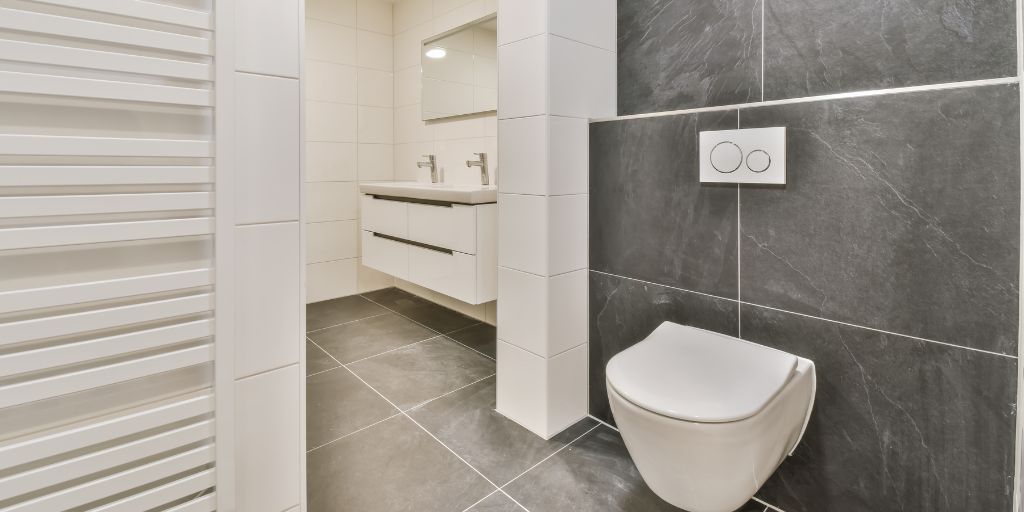
A wall-hung toilet, on the other hand, is mounted onto a concealed metal frame hidden inside a wall or boxed-out section. The toilet pan itself does not touch the floor, creating a floating appearance. The cistern is also hidden from view. Although both options function in the same way, this design difference affects installation requirements, costs, and the overall appearance of the bathroom.
The cost difference between wall-hung and floor toilets
At the cheaper end of the scale is a standard floor-standing toilet with a visible cistern. These are usually the easiest and most affordable to install because they don’t need much more than the basic plumbing connections.
The next step up is a floor-standing toilet with a concealed cistern. This creates a cleaner, more modern look because the cistern is hidden behind furniture or boxing, while the toilet itself still sits on the floor. Installation costs are normally a bit higher than a standard toilet, but lower than a wall-hung model.
Wall-hung toilets are generally the most expensive option. As well as the toilet and concealed cistern, they need a strong metal frame to support both the toilet and the user’s weight. This frame then has to be hidden inside a wall or boxed-in structure, which often means extra carpentry, plastering and finishing work. Many people feel the sleek, modern look is worth the extra cost, but it’s a good idea to include these additional expenses in your renovation budget from the outset.
Do wall-hung toilets save space?
One of the main reasons people go for a wall-hung toilet is the idea that it will make the bathroom feel bigger. In reality, that’s a bit of a yes and no answer. The concealed frame and cistern still sit inside the wall or in a boxed-out section, so the actual space the toilet takes up isn’t all that different from a standard floor-standing one.
What wall-hung toilets do really well is create a feeling of more space. Because you can see the floor underneath, the room tends to feel more open and less cramped. Your eye naturally travels across the clear floor area, which helps the whole bathroom feel larger than it actually is. So it’s not really about gaining extra usable space, but more about making the room feel more open visually.
Are wall-hung toilets strong enough?
This is a concern that comes up regularly, especially for homeowners who have never used a wall-hung toilet before. Despite appearances, modern wall-hung systems are incredibly strong. The toilet is supported by a heavy-duty steel frame that is securely fixed within the wall structure. These frames are designed to withstand substantial weight and are rigorously tested by manufacturers.
Many systems are rated to support loads of around 400 kilograms, far more than they would ever encounter in normal day-to-day use. When installed correctly, a wall-hung toilet is every bit as secure and durable as a floor-standing model.
Design considerations when choosing a toilet
Choosing a toilet isn’t just about selecting the style you like best. It’s important to consider how it fits into the overall layout of the room. In some bathrooms, the boxing required to conceal a wall-hung frame can actually become a useful design feature. Rather than simply hiding the frame, installers often extend the structure behind nearby fixtures to create a shelf running along the wall. This can provide valuable storage space for toiletries, decorative accessories or everyday essentials, helping to keep surfaces clear and organised.
On the other hand, in particularly compact bathrooms, the additional depth required for the frame and boxing may affect the positioning of other fixtures. That’s why it’s always important to consider the room as a whole rather than focusing on individual products in isolation. If you’re planning a larger bathroom renovation, these details are usually best considered early in the design process, when there is still flexibility to adjust the layout if needed.
Choosing the right toilet for your bathroom renovation
When it comes to choosing between a wall-hung and floor-standing toilet, it’s not really about which one is “better” overall. It’s more about what works best for your bathroom. If you’re after a modern look and you’re happy to spend a bit more, a wall-hung toilet can be a great option. If you care more about practicality, simplicity and keeping costs down, then a floor-standing toilet is probably the better fit.
Either way, the best bathroom renovations are the ones that strike a good balance between looks and everyday use. A nice-looking bathroom is great, but it also needs to work properly day in, day out. If you take into account your layout, budget and how you’ll actually use the space, you’ll be in a much better position to pick a toilet that suits the room and serves you well for years to come.
Final thoughts
If you’re planning a new bathroom and want to see the options in person, it’s well worth visiting our bathroom showroom in Coventry. Located in west Coventry, just off the A45, our showroom is easy to reach and offers convenient access from surrounding areas.
Seeing everything up close makes it much easier to decide between styles like wall-hung and floor-standing toilets, and it also helps you get a better feel for finishes, layout, and how the space will actually work.
Get in touch with our friendly team and let’s get started on creating your dream bathroom.