
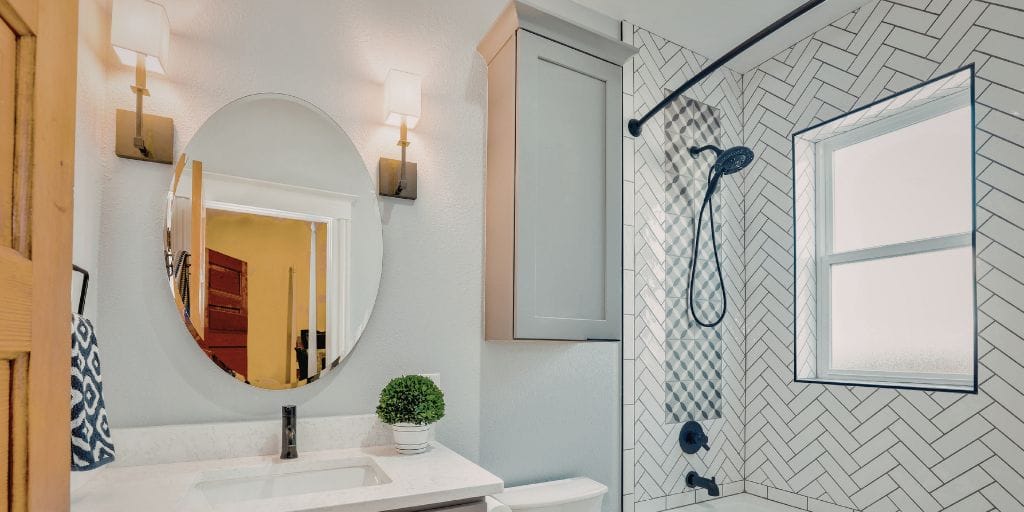
It’s easy to get caught up in the aesthetic side of bathroom renovation – the tiles, taps, colours, layouts – it’s the bit lots of people naturally focus on (because it can be the most fun). But it means that lighting tends to get pushed to the end of the queue. A quick decision, a few spotlights, job done.
But trust us, lighting isn’t just a finishing touch or an afterthought, it affects how your bathroom works day to day – how easy it is to get ready in the morning, how comfortable it is in the evening and sometimes even how safe it feels at night.
At Alan Heath & Sons, lighting is something we plan from the very beginning of every bathroom renovation we undertake. It’s built into the design, not added on afterwards and that makes all the difference.
Why lighting should be planned early in your bathroom renovation
When decisions about your lighting are left until the end of the bathroom refurb process, you might find that layouts are fixed, walls are already boarded and your options really do become more limited.
In short, sequencing matters. Doing things in the wrong order on site nearly always leads to unnecessary hassle, and lighting is no different. Leave it too late and you risk having to work around decisions that have already been locked in.
If you plan your lighting alongside everything else – where your mirror sits, how your cabinets open, where your bath or shower is positioned – you’ll know exactly where lights should go and how they should be wired. Getting it sorted early means everything will just work as it should, without compromise.
Functional vs ambient lighting: it’s not all the same!
A great bathroom doesn’t rely on one single light source. It uses layers, each one doing a different job.
Functional lighting is what you rely on for everyday tasks. Shaving, makeup, cleaning – anything that needs clear, direct light. You usually get this from ceiling downlights or well-positioned mirror lighting.
Ambient lighting is often softer and more subtle. It’s what you want when you’re winding down in the evening or taking a trip to the bathroom half-asleep in the middle of the night.
It’s also worth thinking about who’s using the space. For families with young children, low-level lighting is great for making night-time visits safer without switching on full brightness. It’s these small details that often make the biggest difference in how a bathroom feels to live with.
The most common bathroom lighting choices (and what actually works)
The ideas for bathroom lighting are endless but we find that most homeowners end up choosing a fairly simple, practical combination.
Ceiling downlights are the go-to for most projects. They give even coverage, suit almost any layout and create that clean, uncluttered look that’s so popular.
Mirror and cabinet lighting is a popular choice too. A lot of modern mirrors now come with built-in lighting and demisters which makes them a really practical choice, especially for busy mornings.
Surface-mounted lights can bring in an element of personal style. Our customers often choose these to match a particular look or feel they’re going for and buy them separately to be fitted as part of the overall installation.
Decorative lighting can look great but it’s rarely essential to justify the extra cost.
Dimmers are also much less common in bathroom renovations than they used to be. With a clever mix of mirror and ceiling lighting, most bathrooms already have enough flexibility without the dimmer function.
Getting the placement right
Even the best lighting won’t feel right if it’s in the wrong place. This is where careful planning (at the right stage) really pays off.
Ceiling lights should be spaced evenly to avoid dark patches or overly bright spots. It sounds simple but getting that light smooth and consistent is tricky and can really make a big difference to how the room feels.
Mirror lighting needs a bit more thought. If lights are placed directly above, they can cast shadows across your face which isn’t ideal for everyday routines. Positioning lights slightly in front or using integrated mirror lighting tends to deliver much better results.
And let’s not forget about height. The height of those using the bathroom, the height of your mirrors and cabinets…everyone uses the bathroom in different ways so thinking about who’s using the space and how will help you get the placement right.
Lastly on placement, make sure any lighting placed around your bath or shower is waterproof-rated (IP65+). Safety always comes first.
Warm or cool lighting: what’s best?
Again, the colour temperature of your lights can completely change the feel of your bathroom.
We mostly see cool white being used in our clients’ spaces. It gives a clean, bright light that works well for practical, everyday tasks.
Warm white can be lovely too but it’s softer and more relaxed. For those reasons, it’s better suited to ambient lighting. Especially if you want to create a more calming space for evenings.
The best way (and what we’re seeing lots of) is to choose a combo of the two. Bright where you need it, softer where you want it to get the feel of your bathroom just right, whenever you’re using it.
Cost considerations (and where to keep things sensible)
It’s easy to get carried away but lighting doesn’t have to be complicated or expensive to work well.
A straightforward setup with good quality LED downlights is usually the most cost-effective option. As well as being reliable and long-lasting, they’re also easy to maintain especially if you’re using fittings where the bulb can be replaced rather than the whole unit.
Surface-mounted lights can vary in cost depending on your style and whether or not you’re sourcing them yourself.
Smart lighting is where costs can start to climb. While it’s very modern and sounds appealing, most people don’t end up using it enough to justify the extra spend. In most cases, simple and reliable wins.
If cost is a factor in your bathroom renovation, lighting is one of those areas where keeping things practical usually pays off long-term.
Lighting and your renovation timeline
Lighting also plays a key role in your renovation timeline.
All wiring and junction boxes need to be installed before plastering or tiling begins so that sets your timeline up with decisions about layout and fittings needing to be made early on.
The actual lights themselves are fitted towards the end of the project, once everything else is in place. In fact, this is where delays can creep in. If you’re planning to choose later on or even supply your own lights, we’d really recommend having them ready well before the final stages.
What works in real homes
We’ll almost always tell you that the best lighting setups are often the simplest ones.
Low-level lighting, like subtle lighting under a bath, can make a big difference at night without being intrusive. Especially in family homes where you don’t want to wake everyone up creeping to the bathroom.
A lot of our customers choose simple and practical for the main lighting and then choose their own feature lights to personalise the space.
And despite all of the new technology available, most people still prefer lighting that just works for them. No apps or overthinking.
Keep it simple and plan it properly
It all comes back to this. We know that light has a significant impact on your enjoyment of the space – how it feels, how it functions and how easy it is to live with over time.
The key is to think about it early and keep things simple.
If you’re planning a bathroom refurb project, getting the lighting right from the start will make everything else fall into place much more easily. And when it’s done properly, it won’t stand out, it will just do its job, exactly as it should.
Get in touch to start your project or talk to us about your bathroom renovation plans.