
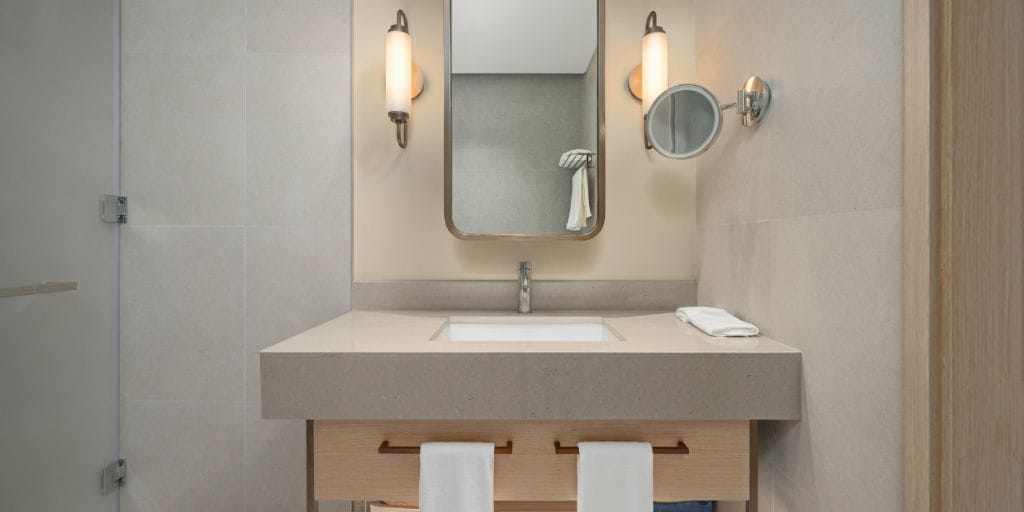
When it comes to bathroom renovations, technology can be a great helper. There are apps, 3D planners, and tools that can create gorgeous layouts and show you what your dream space might look like.
But even the smartest AI tool can’t replicate the eye of a professional bathroom installer. There’s a world of details, practicalities, and quirks that AI simply can’t “see.” Here’s what AI doesn’t have a clue about when designing bathrooms.
Hidden infrastructure
One of the biggest blind spots in AI-driven bathroom design is the stuff that’s invisible to the naked eye; things like pipes, joists, and wiring. A layout might look perfect on a screen, but once you start thinking about where the hot water pipe runs or how the joists are spaced, things can get tricky.
For example, you might want a floating vanity right in the middle of a wall, but if the joists run the other way, mounting it safely becomes a challenge. Similarly, AI can suggest repositioning a radiator or adding a towel rail, but it won’t know that the plumbing behind that wall is in the way or that rerouting it could cost a small fortune.
Regulations and compliance
Building regulations, Part P electrical certification, and accessibility standards all need to be followed to ensure a home is legal and safe. After all, bathroom design isn’t just about what looks good!
AI tools can’t check whether your new shower setup meets local building codes or whether your new electrics require a certified installer. A design that looks perfect in a planner might end up being non-compliant, leaving you with fines, difficulty selling your home in the future or worse, safety risks.
Accessibility considerations are another area where AI often falls short. A layout that works in theory might make life difficult for anyone with limited mobility. The human touch ensures your bathroom can actually be used by everybody who lives there.
Material behaviour
Materials don’t always behave the way we think they will. A bath without a lip, a wall with a high splash risk, or certain types of tile finishes can all create long-term problems that AI can’t predict.
For instance, a smart system might suggest an open shelf near a sink for a modern aesthetic. Looks great on screen, but in reality, water splashes everywhere, and those shelves will need constant wiping down. Similarly, some finishes may stain, peel, or wear unevenly over time, and knowing this comes from experience, not a render.
Plus, there’s maintenance you may not think about. Sure, the glossy AI image of a bathroom with a stone bath looks incredible, but are you prepared for the cost and labour of ensuring that bath is regularly maintained and kept waterproof?
Practical storage solutions
One area where people often underestimate the human touch is storage. On paper, a mirrored cabinet above the sink seems like a no-brainer but unless you consider daily routines, it might not work.
For example, do you need the mirror to sit lower for kids? How deep should the drawers be to hold your products without jamming? Do you need soft-close cupboards to avoid banging doors early in the morning? AI won’t ask these life questions, it can only replicate the idealised layout you feed it.
What should you do instead of relying on AI to design your bathroom?
AI can be a useful tool to shortlist design ideas, experiment with colours, or visualise layouts. But before you start drilling holes or ordering tiles, there are a few steps that make a world of difference:
Get a professional audit:
Have a builder or installer walk through your plans. They’ll spot structural issues, plumbing challenges, and compliance concerns before they turn into expensive surprises.
Walk through your routine
Mentally act out your daily bathroom habits, things like getting ready, showering, brushing teeth. This helps you catch design flaws that might not be obvious on a screen.
Talk to experts
The installers, plumbers, and electricians have years of hands-on knowledge. They know what works, what fails, and how small tweaks can save frustration down the line. Why gamble on trial and error when you can get it right the first time?
Final thoughts
Whilst we agree that AI can offer up some wonderful inspiration for your bathroom renovation, there are limits to it. Hidden infrastructure, compliance rules, material quirks, and real-life usability are areas where experience matters more than pixels.
In the end, the difference between a bathroom that looks good on a screen and one that works flawlessly in daily life comes down to human insight. And no matter how advanced technology gets, some things just can’t be programmed.
Refreshing your home with a bathroom renovation? Talk to our friendly team. We have over three decades of experience transforming bathrooms into dreamy and practical spaces for you and your loved ones to enjoy.