
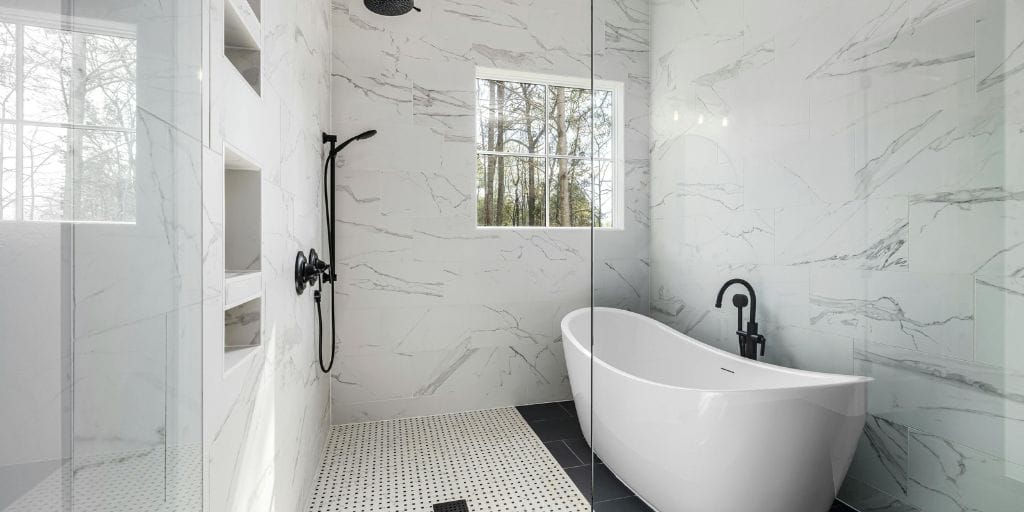
Wet rooms have become one of the most desirable bathroom upgrades for homeowners looking to create a modern space. With their open-plan appearance and easy-access design, it’s easy to see why they’re so popular. However, many people are surprised to discover that installing a wet room is far more complex than fitting a standard shower. From structural alterations and specialist waterproofing to drainage requirements and precise tiling, wet rooms often involve significantly more work than a traditional shower installation.
Before deciding whether a wet room is right for your home, it’s worth understanding exactly what’s involved, how much complexity can affect costs, and whether a simpler alternative could deliver the same result.
What is a wet room?
One of the biggest misconceptions is that any walk-in shower is a wet room. In reality, there is an important difference. A traditional shower uses a shower tray that has a built-in slope directing water towards the waste. A walk-in shower may have an open entrance and glass screen, but it still relies on a shower tray beneath your feet.
A true wet room works differently. Instead of a tray, the tiled floor itself becomes the shower base. The floor is carefully constructed with a gradient that directs water towards a drain built into the floor surface. To achieve this, installers typically fit a tray former or wet room former beneath the tiles. This creates the correct slope while maintaining the appearance that wet rooms are known for. The entire floor area must also be fully waterproofed before tiling takes place, ensuring water cannot penetrate the structure below.
Drainage is usually handled through either:
- Linear drains positioned along one edge of the shower area
- Central floor drains located within the tiled floor
While the finished result may look simple, the engineering beneath the tiles is far more involved than many homeowners realise.
How much does a wet room cost to install?
Many people assume wet rooms are cheaper because there is no shower tray. In reality, the opposite is often true. Creating a fully tiled shower floor requires substantial preparation work before any tiles can be installed. This additional labour and specialist materials typically make wet rooms more expensive than standard shower installations.
Several factors contribute to the increased cost:
Structural preparation
The existing floor often needs to be altered to accommodate drainage and create the required slope. This may involve removing floorboards, adjusting floor structures, and preparing the subfloor.
Waterproofing
Every wet room requires a tanking system. Specialist waterproof membranes, sealing products, and installation techniques are essential to prevent water damage.
Drainage installation
Unlike a conventional shower tray, the drainage system must be integrated into the floor structure. Positioning waste pipes correctly can add significant complexity.
Additional labour
Creating accurate falls towards the drain requires precision. Tiling a wet room floor is considerably more demanding than tiling around a standard shower tray.
What are the structural requirements for installing a wet room?
One of the most important things to understand is that not every bathroom is suitable for a wet room. The biggest challenge is usually drainage. For a wet room to function correctly, the waste pipe must sit below the shower floor so water can drain away effectively. Depending on the layout of the property, this is not always straightforward.
Several structural factors can affect whether a wet room is possible:
Floor structure
The direction and positioning of floor joists can impact where waste pipes can be installed. In some cases, modifications may be required to create the necessary drainage route.
Drainage access
Pipework within floors and walls may restrict where drains can be positioned. If the waste connection cannot be installed at the correct depth, achieving a level-access wet room may not be possible.
Subfloor preparation
Most wet room installations require existing flooring to be removed before marine plywood, waterproof membranes, and tiling systems can be installed. This is why a professional survey is so important. What looks achievable on a bathroom design plan may not always be practical once the existing floor structure is assessed.
The hidden practical downsides of wet rooms
There’s definitely no denying that wet rooms look impressive. However, there are some practical considerations that are often overlooked.
More cleaning
A traditional shower tray has a smooth, easy-to-clean surface. Wet rooms rely on tiled floors, which means additional grout lines and textured surfaces that require more maintenance.
Water control
Poorly designed wet rooms can allow water to spread beyond the intended shower area. If drainage gradients are not carefully planned, water can travel across the room rather than towards the drain.
Wet floors
Unlike a shower tray that contains most of the water, wet rooms naturally leave larger areas of flooring wet after use. While this may not be an issue in warmer climates, it can be less appealing during colder UK winters.
These practical realities don’t immediately make wet rooms a bad choice, but they are important factors to consider before making a decision based purely on appearance.
When a wet room makes sense
Despite the additional complexity, wet rooms can be an excellent choice in the right circumstances. They are particularly well suited to:
- Accessibility-focused bathrooms requiring step-free access
- Future-proofed bathroom designs for long-term mobility needs
- Larger bathrooms with sufficient space for effective drainage design
- Luxury bathroom renovations where aesthetics are a priority
Why many homeowners choose walk-in showers instead
For many bathrooms, a walk-in shower delivers a very similar visual effect without the structural complexity of a full wet room. A walk-in shower with a low-profile tray offers several advantages:
- Easier installation
- Lower overall cost
- Simpler drainage requirements
- Easier cleaning and maintenance
- Reduced risk of water spreading across the room
For homeowners considering a bath out shower in conversion, a walk-in shower often provides the ideal balance between appearance, practicality, and budget. If you’re looking to replace your bath with a walk-in shower, this option can achieve the open, modern look many people want while avoiding some of the challenges associated with a fully tiled wet room floor.
The importance of professional design and installation
The success of any wet room depends heavily on the quality of the design and installation.
Drainage gradients must be accurate. Waterproofing must be installed correctly. The floor structure must support the drainage system without compromising the integrity of the property.
When any of these elements are overlooked, problems can quickly arise, including standing water, leaks, and costly repairs. Professional surveying, planning, and installation are therefore absolutely essential to ensure the finished room performs as well as it looks.
Things to consider before choosing a wet room
If you’re thinking about installing a wet room, it’s worth following a few simple steps before making a final decision:
- Assess your bathroom layout and drainage options.
- Consider day-to-day practicality as well as appearance.
- Compare wet rooms with walk-in shower alternatives.
- Visit a showroom to see different layouts in person.
- Arrange a professional survey to confirm whether your floor structure and drainage are suitable.
Final thoughts
A wet room can be a stunning addition to the right property, but it isn’t always the best solution for every bathroom. Taking the time to understand the structural requirements, installation complexity, and practical realities will help ensure you choose the option that works best for your home.
Planning a bathroom renovation in Coventry and want to talk through your options? Get in touch with our friendly team or pop into our bathroom showroom in Coventry, we’d love to help you design your dream space.