
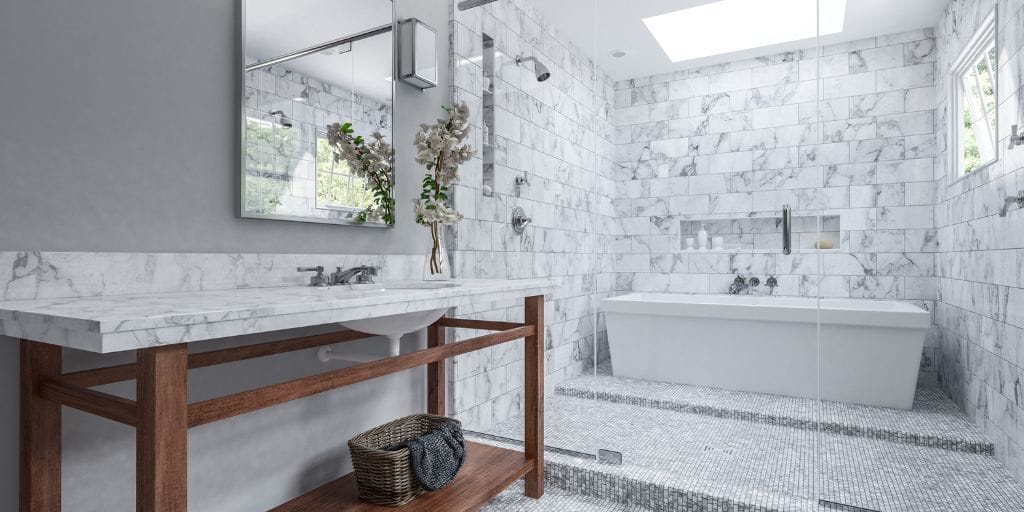
Who hasn’t admired a spacious, stylish walk-in shower in a hotel or film? They might look like a luxury reserved for designer homes, but walk-in showers and wet rooms have become increasingly popular in everyday bathrooms.
If you’re thinking about redesigning your bathroom, perhaps to make better use of the space or replace an old bath, both options are worth considering. But it begs the question, which one is right for your home? We’ve been designing and installing bathrooms for years, and while both have their place, we generally recommend a walk-in shower for most homes. Here’s why, and when a wet room might be the better choice.
What’s the difference between a walk-in shower and a wet room?
There doesn’t seem to be a single, clear definition for a walk-in shower and a wet room, and so we all have a different idea of what each one is. However, there are some general differences.
A wet room is an open-plan, fully waterproofed bathroom where the shower area isn’t separated from the rest of the room by an enclosure. The floor is tiled and gently sloped towards a drain, allowing water to run away. On the other hand, a walk-in shower is usually a separate showering area that you can enter without stepping over a bath or high shower tray. It typically has a glass screen to contain the water, with either a shower tray or tiled floor.
There’s also room to combine elements of both. For example, you could have a fully tiled, level-access showering area with a glass panel to help prevent water from spreading across the bathroom. At Alan Heath and Sons, we can help you find a design that works for your space, rather than trying to squeeze your bathroom into one particular style.
What do we recommend and why?
With decades of experience designing and installing bathrooms, we’ve developed a preference for walk-in showers in most domestic settings. A good-quality shower tray and single glass panel can give you much of the open, contemporary look people love about wet rooms, without some of the practical drawbacks.
Water is more contained, there’s generally less floor area to clean, and you don’t need the same fully tanked, open-plan arrangement. It can also be a more straightforward option in terms of installation. That’s not to say wet rooms don’t have their place, but for many homes, a walk-in shower offers a better balance between appearance, accessibility and everyday practicality.
What are the advantages for each set up?
An open plan wet room does allow for more space, which may be necessary for homes where elderly or disabled people need more access. However, there’s likely to be more splash in the room, which makes towels, toilet and other furniture wet, and more likely to be hit by soap suds and shampoos – just think more cleaning!
We do find that a walk-in shower is the more popular design. The room will still feel modern, spacious, and airy, while the splash is contained by the tray and glass screen. You’ll still get splash from the open end, so you’ll need a larger shower tray than normal. As always, as sizes increase, so will the price, although this is countered by the lower cost of the glass panel compared to a full glass shower enclosure.
You could choose a tiled showering area, which matches the rest of the room. However, tiles do mean more grout lines to clean, whilst it’s far easier to maintain the appearance of the smooth surface of a shower tray. If you are unable to get the waste pipe under the floor you are going to need to raise the tiled tray to get the correct fall. This will detract from the clean lines of a level access showering area.
Are wet rooms or walk in showers better for the elderly?
Compared to traditional showers or baths, both wet rooms and walk in showers are a great alternative for older individuals or those with mobility concerns. Wet rooms can provide more space and easier accessibility for those with mobility challenges, as they eliminate the need to step over a shower curb. This seamless design minimises tripping hazards and can even allow for wheelchair access if necessary.
On the other hand, walk-in showers, equipped with low or no-threshold entries, also enhance accessibility for the elderly. They offer a balance between a contained showering space and ease of access, often coming with the option of additional features like grab bars and non-slip flooring to enhance safety.
Are wet rooms or walk in showers suitable for small bathrooms?
Both wet rooms and walk-in showers can be suitable options for small bathrooms, but you must keep certain things in mind. In the case of a small bathroom, a wet room’s open-plan design can create an illusion of space, making the area feel less cramped. Without the need for a shower enclosure, wet rooms maximise the available square footage and can be customised to fit the compact dimensions efficiently. However, proper waterproofing and drainage is crucial in wet rooms to prevent water damage, and that does typically mean more cost.
On the other hand, walk-in showers designed specifically for small spaces often come with space-saving features like corner placements or streamlined designs. To really understand whether a walk-in shower is suitable for your space, you should seek professional advice from bathroom experts – like us! We can even provide CAD designs to help you envision what a wet room or walk-in shower would look like in your space.
Do wet rooms or walk in showers add value to your home?
You may have already made up your mind, but if you’re still thinking about it, there are a couple of other considerations. A shower cubicle is considered to be more fashionable, and it’s a practical solution if you want a separate shower in a smaller space.
If you’re renovating in order to add value to your home, it’s unclear whether a wet room or walk in shower has a big impact. An estate agent will list it as a feature, which could appeal to mature customers who struggle to climb into the bath. However, a family with young children to bathe might find it off-putting.
If you’re renovating with resale in mind, think about the bathroom as a whole. A fresh, well-designed space is likely to make a better impression than simply choosing one type of shower over another. Our advice is always to choose something you’ll enjoy using every day, rather than making the decision purely around potential resale value.
Frequently asked questions
How much will a wet room or walk-in shower cost?
The cost depends on the size of your bathroom, the materials you choose, and the work involved in installation. A wet room also requires appropriate waterproofing and drainage, so the overall project needs to be assessed before a price can be given. Talk to our team for a personalised quote.
How long does installation take?
It depends on the scale of the renovation and whether any additional plumbing, flooring or structural work is needed. We always start by looking at the layout of the room to see what fits well and what doesn’t. It’s all very well having a lovely walk-in shower but if you have to compromise on the rest of the room, it is then a large compromise. Some of the best rooms we do are not necessarily the products the client initially asked for, but what worked best for the layout of the room.
What kind of drainage system is required for efficient water removal in wet rooms?
Wet rooms need a suitable drainage system, with the floor carefully sloped towards the drain to allow water to run away. The existing floor construction and position of the waste pipes will influence what’s possible, so these need to be assessed during the planning stage.
Are there any limitations in terms of water pressure or temperature control?
Water pressure and temperature control are all down to the style of shower installed. We would always recommend a thermostatic shower valve as it will monitor the temperature for you and will always give you the temperature you ask for (assuming you have hot water that is).
Does a walk-in shower need a shower tray?
Not necessarily, walk-in showers can have either a shower tray or a tiled floor with suitable drainage. The right option will depend on your preferred finish, the existing floor and the practical requirements of the installation.
Thinking about getting a wet room or walk-in shower installed? Talk to our friendly team today, we’d love to help you find the perfect shower for your bathroom!