

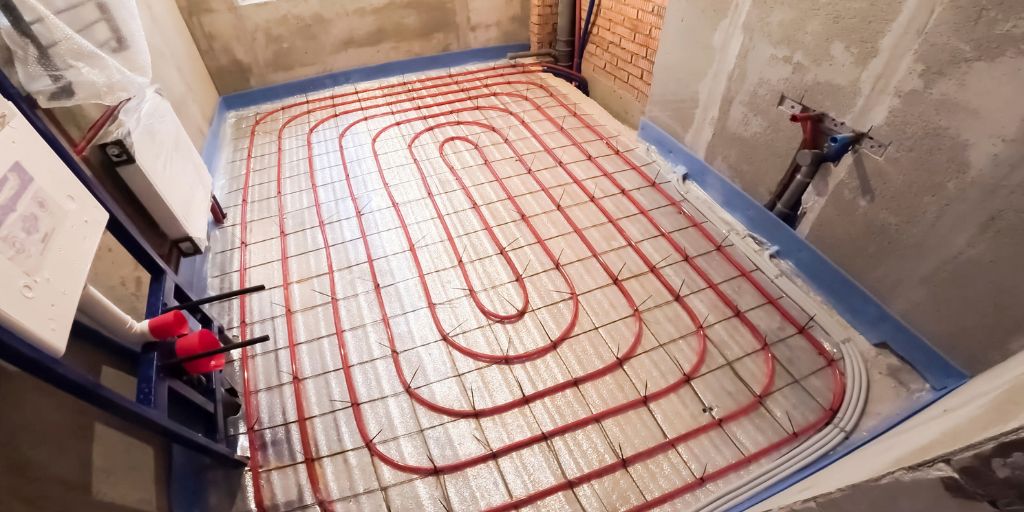
Underfloor heating is still widely seen as a luxury upgrade in bathroom design, offering warm floors and an even spread of heat throughout the room. In small bathrooms, though, the decision above whether to include it isn’t always that straightforward. While it can improve comfort and help free up wall space, it also adds cost and may not deliver as much value as people expect.
To help you decide if it’s right for your small bathroom, we’ve put together the underfloor heating pros, cons, costs, and practical considerations.
What is underfloor heating in a bathroom?
Underfloor heating is exactly what it sounds like, a heating system installed beneath your bathroom floor that gently warms the room from the ground up. Instead of relying on a radiator blasting heat from one spot, the warmth spreads more evenly across the whole floor.
There are two main types:
- Electric systems – the most common choice for bathroom renovations, especially small spaces. These systems are easier to install and are typically added as part of an existing bathroom upgrade rather than being planned in when a house is first built.
- Water systems – usually connected to a home’s central heating system and more commonly installed as part of a new-build or whole-house heating setup. This makes them less practical for most small bathroom refits.
For most small bathrooms, electric systems are the go-to because they’re simpler to retrofit. And of course, one big appeal is getting rid of wall radiators, which helps open up the space visually and practically.
Benefits of underfloor heating in small bathrooms
Underfloor heating does offer genuine advantages, but its value depends heavily on how the bathroom is used and designed.
Warmth underfoot
One of the most noticeable benefits is stepping onto a warm floor, especially during colder months. This is particularly welcome with tiled flooring, which can otherwise feel cold and uncomfortable.
Better use of space
Small bathrooms often struggle with layout limitations. Removing a radiator or bulky towel rail can free up valuable wall space for storage, furniture, or a cleaner design. In some layouts, underfloor heating can even replace the need for wall-mounted heating entirely.
Even heat distribution
Instead of heat coming from a single point, underfloor systems distribute warmth more evenly across the room. This reduces cold spots and creates a more consistent temperature overall.
More design flexibility
With no need to plan around a radiator, you gain more freedom when designing a compact bathroom. This can make a noticeable difference when working with tight layouts or exploring small bathroom renovation ideas.
Downsides of underfloor heating in small bathrooms
While underfloor heating sounds appealing, there are a few practical drawbacks that often get overlooked.
Limited time in the room
Bathrooms are usually used for shorter periods, such as getting ready in the morning or winding down at night. Because of this, the heating system may not always be running long enough for the benefits to feel significant.
Underfloor heating can be programmed to come on and off at times that suit your routine, helping to make it more efficient. However, once the system switches off, you may notice the floor feels cooler to the touch, even if the overall room temperature remains comfortable.
The comfort expectation gap
Many people expect the floor to feel constantly warm, but in reality, it depends on timing, thermostat settings, and usage. If it’s not used correctly, it can feel like it’s doing very little.
Temperature contrast issues
One common surprise is how the floor feels after a hot shower. Even if the floor is comfortably warm, it can still feel cool when stepping out of a much hotter environment, such as a shower or bath.
Cost vs perceived value
In small bathrooms especially, the return on comfort can feel limited compared to the installation cost. This is often where expectations and reality don’t fully align.
How much does underfloor heating cost in a small bathroom?
Underfloor heating is not a low-cost upgrade, particularly when added during a renovation.
Installation costs
Typical expenses include:
- Electric heating system materials
- Floor preparation work
- Insulation boards
- Labour for installation and tiling
For a standard small bathroom, costs can easily add around £1,000 or more, depending on the complexity of the space and finish required.
Running costs
Day-to-day running costs are usually not excessive, especially with modern thermostats and timers. However, the issue is not the running cost itself, but whether the system is used enough to justify the installation cost in the first place.
Small bathroom underfloor heating installation considerations & requirements
Installing underfloor heating involves more preparation than many homeowners expect. The process typically includes:
- Removing existing flooring
- Preparing and levelling the base
- Installing insulation boards to improve efficiency
- Laying the heating mat or cable system
Re-tiling or finishing the floor surface If anything is done incorrectly, it can affect performance or even cause system failure. Poor installation can lead to issues such as cold spots, uneven heating, or long-term breakdowns. This is why professional installation is essential, especially during a full bathroom renovation where multiple trades are involved.
When underfloor heating makes sense in a small bathroom
Despite the drawbacks, there are situations where underfloor heating can be a very good choice. It makes the most sense when:
- There is no practical space for a radiator or towel rail
- You want a clean, minimal look with no visible wall heating
- The bathroom is used frequently, such as a main family bathroom
- You are aiming for a higher-end finish and comfort-focused design
- If you struggle to get your kids to hang up their towels, they will still dry on the floor!
Alternatives to underfloor heating in small bathrooms
In small bathrooms, traditional options often do the job just fine.
Heated towel rails
Probably the most popular option as heated towel rails warm the room and dry towels at the same time.
Compact radiators
Modern ones can be surprisingly slim and still heat a small room quickly.
Dual-purpose towel rails
A good middle ground if you want efficiency and practicality.
These options are usually cheaper and heat the space faster, which can matter more than you’d think in a small bathroom.
Things to think about before deciding
Before going for it, it helps to be honest about how you’ll actually use it:
- How often do you use the bathroom?
- Will you notice the difference day to day?
- Is wall space really that limited?
- Is the comfort worth the extra spend?
It’s one of those upgrades that sounds amazing in theory, but only really makes sense in the right setup.
Final thoughts
Underfloor heating in small bathrooms can absolutely enhance comfort and improve design flexibility, but it’s not always the most practical investment. The biggest factor is usage. In a space used briefly each day, the benefits may feel limited compared to the cost and installation effort.
For some homeowners, especially those prioritising minimalist design or limited wall space, it makes perfect sense. For others, a well-chosen radiator or towel rail may offer better value and more noticeable comfort. As with most bathroom decisions, the best results come from balancing design goals with everyday practicality and thinking carefully about what will improve your space long-term.
Considering a bathroom renovation in Coventry? Get in touch with our expert, friendly team to start designing your new space.